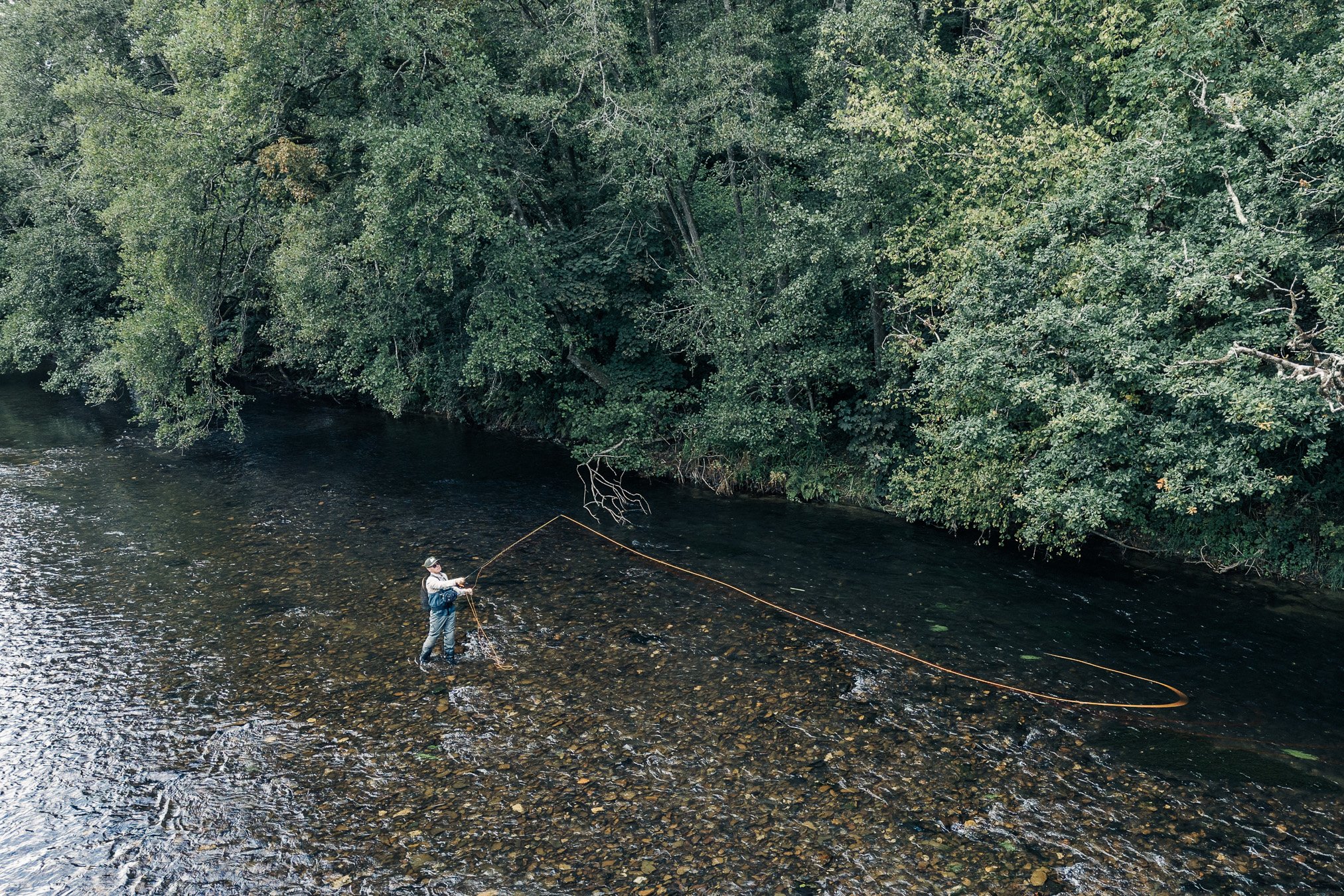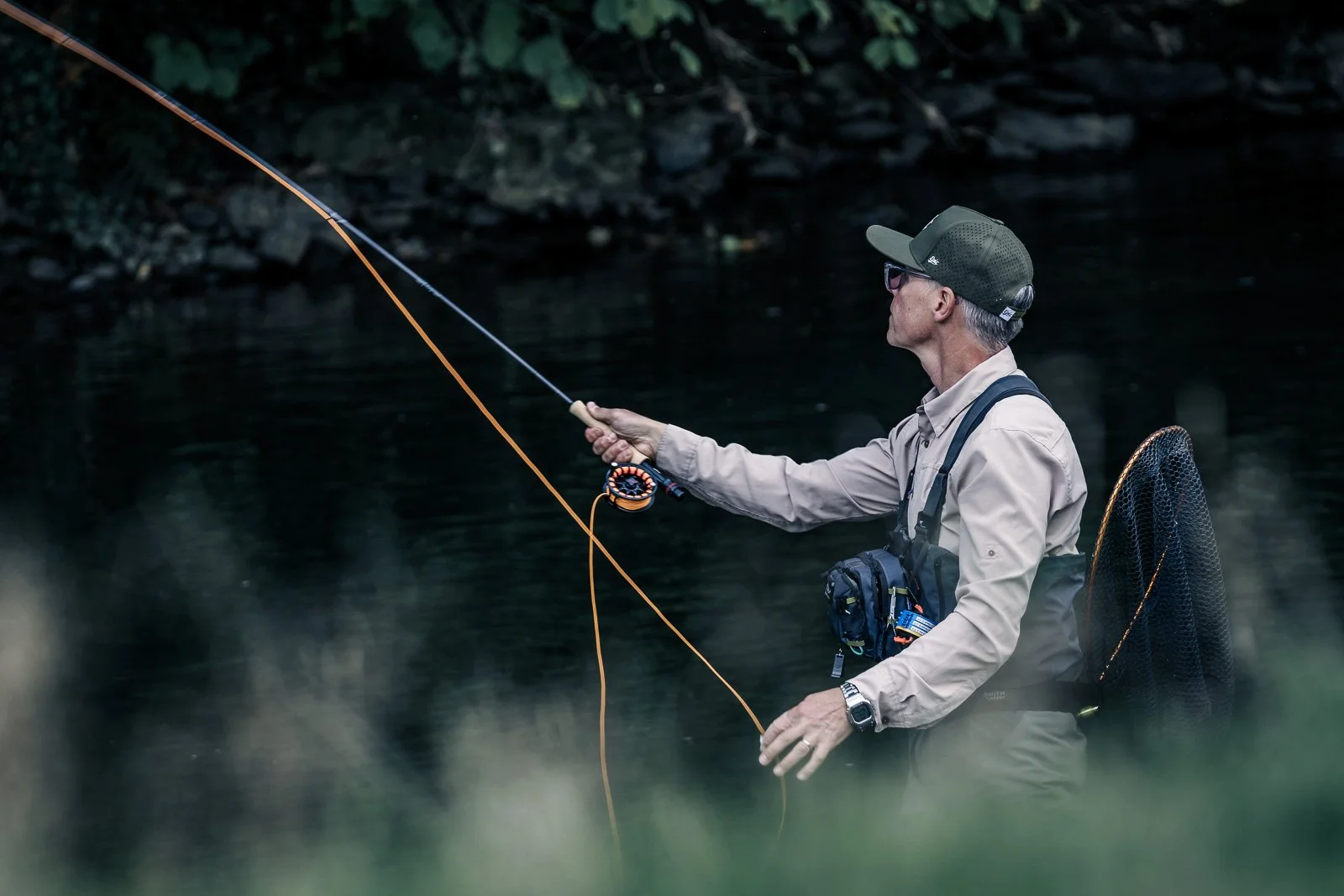
“The great charm of fly-fishing is that we are always learning.....mastering the presentation and the cast is a lifelong pursuit.”
Fly Casting Tuition
Fly fishing is a specialised discipline distinct from conventional angling. Rather than relying on a heavy lure or bait to pull line from the reel, fly fishing uses a weighted fly line to deliver an artificial fly with precision.
Effective fly fishing requires the ability to identify areas of a river where trout are potentially located. Trout position themselves according to the need for food, shelter, and rest; reading these factors guides accurate fly presentation. Developing efficient casting technique is essential for presenting the fly naturally in locations where trout are feeding.
Practice and fishing are best approached separately. Dedicating time to focused casting practice preserves both the effectiveness and the enjoyment of on-water fishing, much as a golfer separates practice on the golf range from a round on the course.
Instruction from a qualified coach accelerates progress by teaching sound mechanics, improving accuracy, and building confidence and safety awareness.
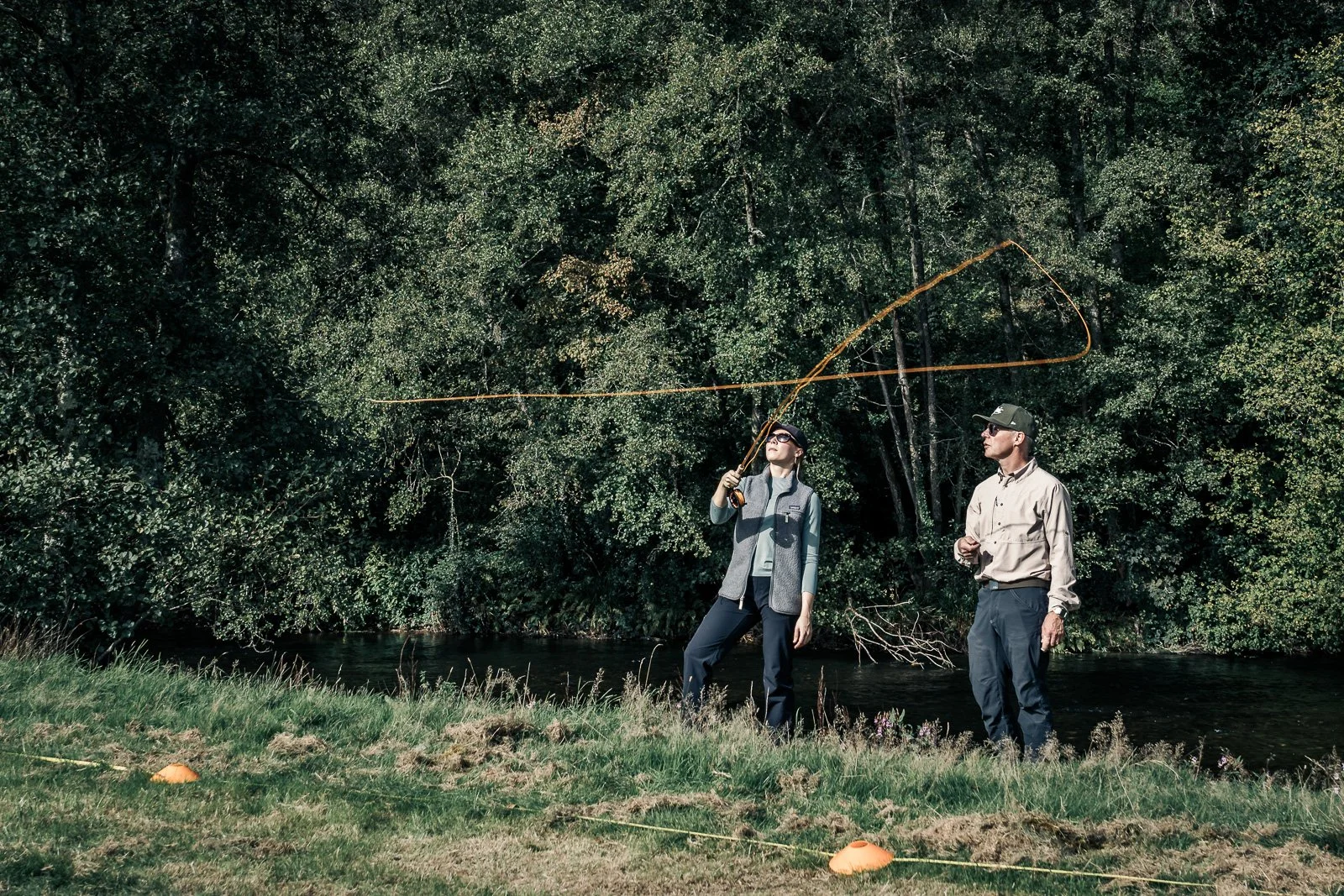
Lessons typically begin on grass to establish fundamental skills before moving onto water.
A suitable venue will be agreed in advance. All equipment can be provided at no additional charge if required.
-
Fly casting requires time and sustained practice. Introducing too much information in a single lesson can cause mental and physical fatigue and hinder progress. For this reason, a series of shorter sessions is more effective: it allows new skills to consolidate and provides opportunities for practice between lessons so progress can be monitored and reinforced. Frequent, short practice sessions produce the best results.
We recommend a block of three 2-hour sessions to achieve meaningful improvement while keeping lessons enjoyable and informative.
The total cost for three 2-hour sessions for one person is £200.
-
Fly casting requires time and sustained practice. Introducing too much information in a single lesson can cause mental and physical fatigue and hinder progress. For this reason, a series of shorter sessions is more effective: it allows new skills to consolidate and provides opportunities for practice between lessons so progress can be monitored and reinforced. Frequent, short practice sessions produce the best results.
We recommend a block of three 2-hour sessions to achieve meaningful improvement while keeping lessons enjoyable and informative.
The total cost for three 2-hour sessions for two persons is £250.
Introduction to Fly Casting
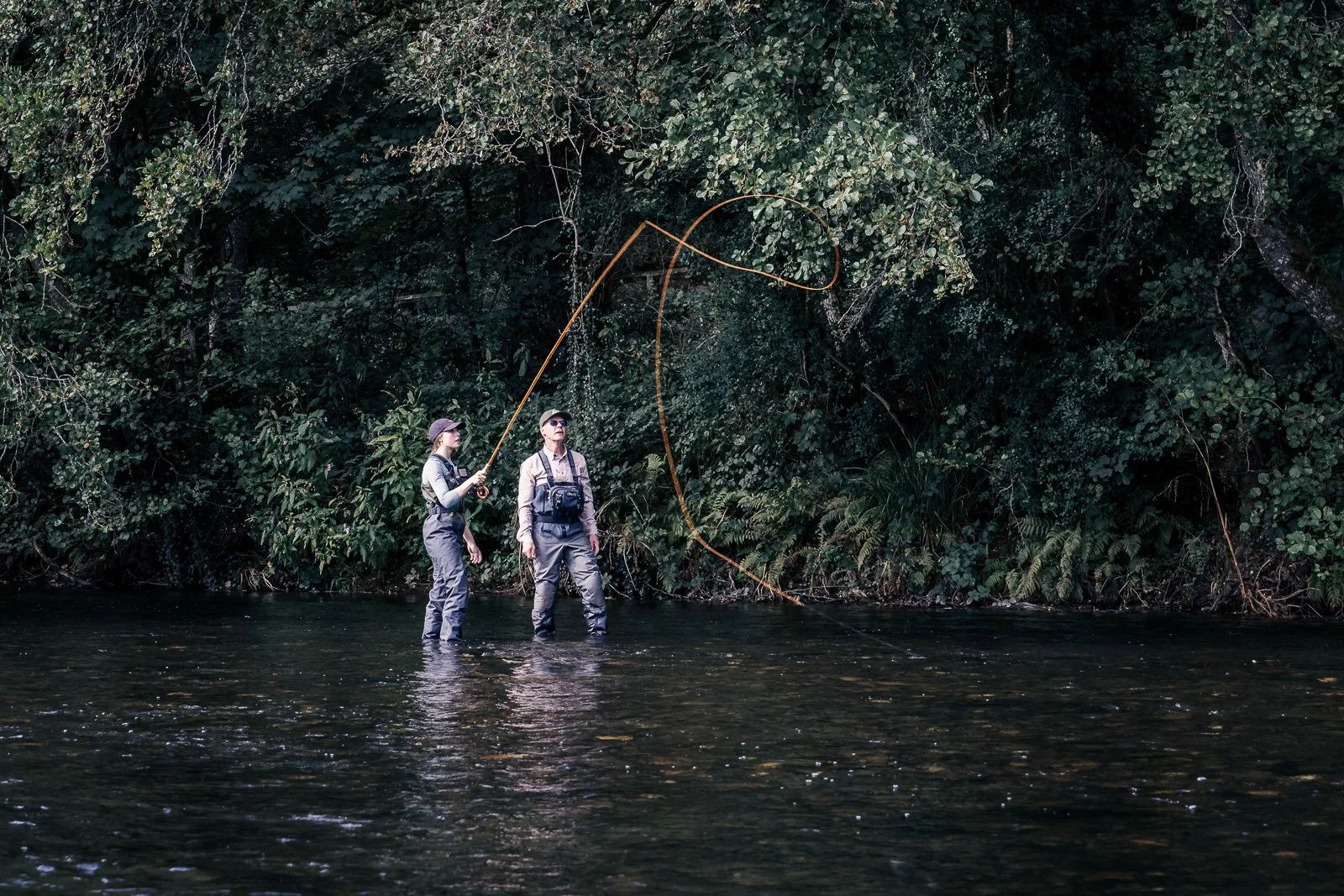
If you are new to fly fishing, this relaxed session provides the ideal introduction.
Andrew will begin by emphasising the importance of safety on and around the water while also covering basic angling etiquette and respect for other anglers.
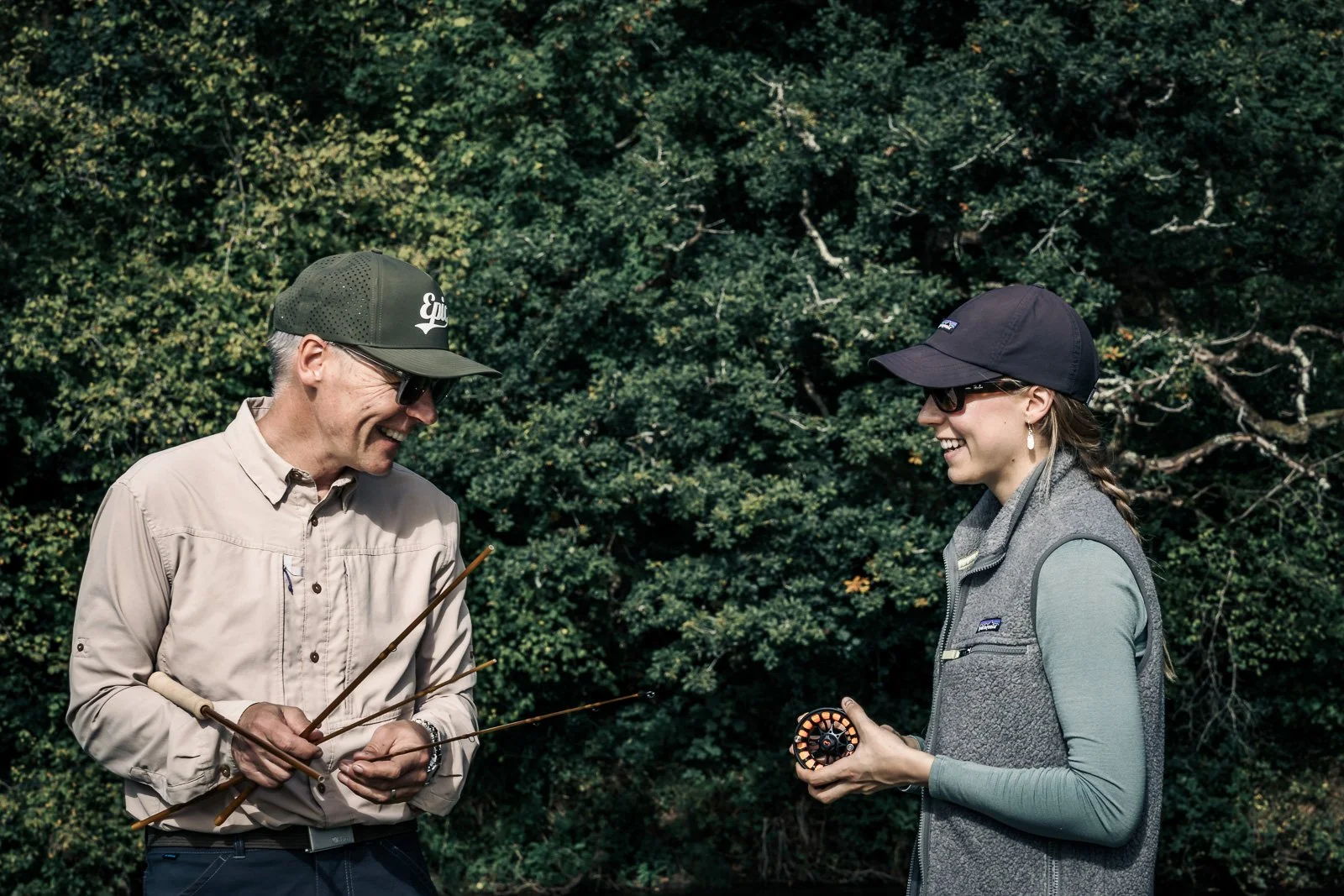
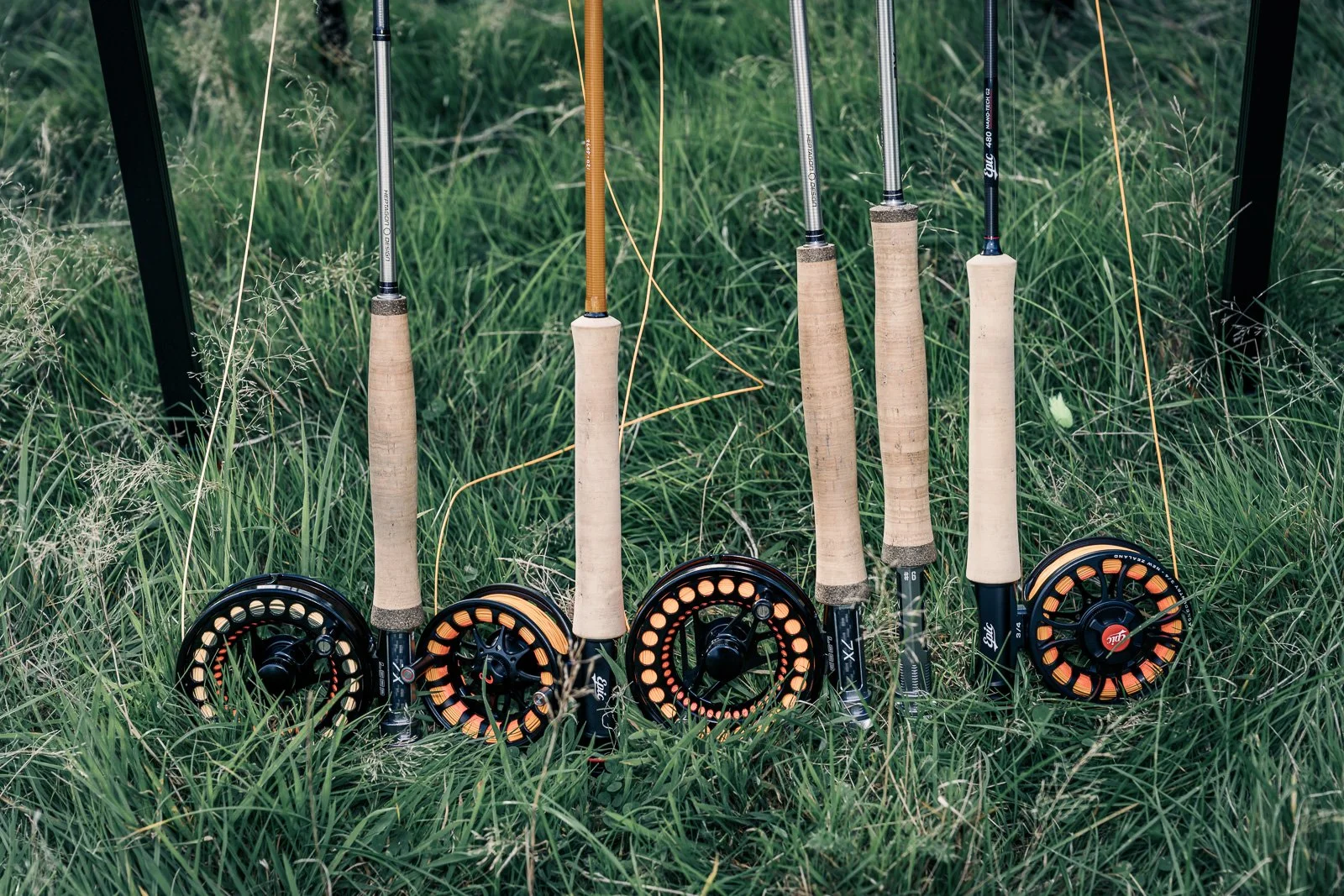
He will then introduce the essential equipment, explaining each item and demonstrating how to safely assemble it. The lesson will explain how to select an appropriate fly line and leader for your chosen artificial fly and how to match a rod to that line for balanced casting.
The session will then focus on a series of practical fly-casting drills on grass designed to demonstrate the fundamental casting mechanics and to develop reliable basic fly-line control.
-
Safety should always be the main focus while casting and fishing.
Andrew will cover the key safety points to be aware of and also cover the do’s and dont’s while fishing.
-
Andrew will introduce the basic tackle required and how to safely assemble it.
The choice of fly line depending on the type of flies to be cast and what rod and reel would be suitable for the fly line.
-
This lesson will also cover some casting drills to demonstrate and practice basic fly line control to start your fly fishing journey with a strong foundation.
Fundamental Fly Casts
In fly fishing, there are a few fundamental casts that provide the foundation for effective presentation and basic fly line control. Proficiency in these techniques equips an angler to handle the majority of on‑water situations. The fundamental casts to learn first are:
Pick‑up and lay‑down: a controlled method for quietly lifting the fly line and fly off the water and returning them to a target with minimal disturbance.
Overhead cast: a straight‑line cast comprising an aerial back cast and an aerial forward cast; the primary motion for achieving distance and accuracy.
Roll cast: a vital technique for confined situations or when a back cast cannot be executed.
Mastering these casts covers most common fishing scenarios and establishes a solid base from which to progress.
-
The Pick-Up and Lay-Down cast (PULD) is a foundational fly-fishing building block used to quietly lift a line off the water and efficiently deliver it back to a target.
-
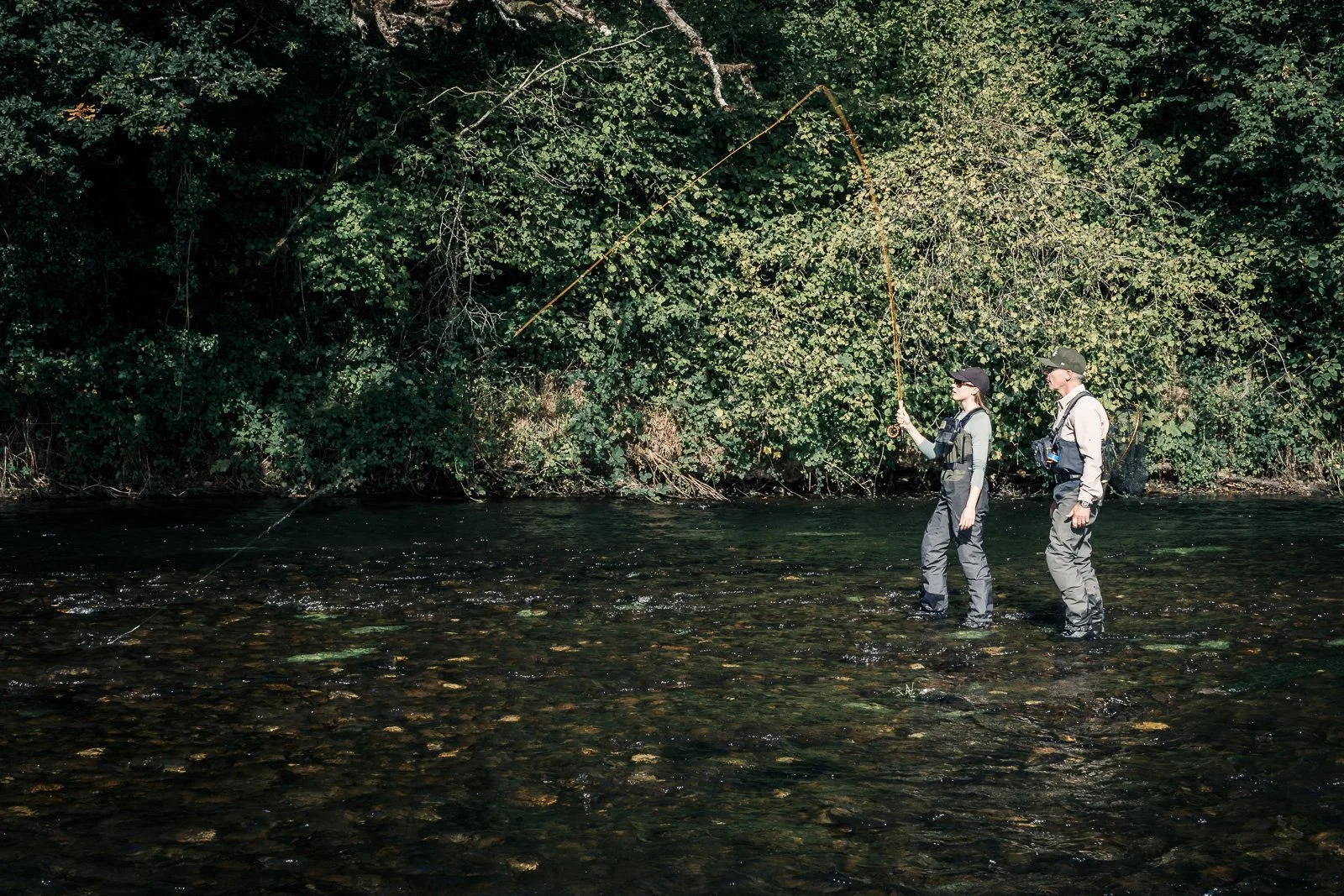
An overhead cast is a straight-line cast that features an aerial back loop and an aerial forward loop. Learn how to change the trajectory of the loop in order to cast at specific targets.
-
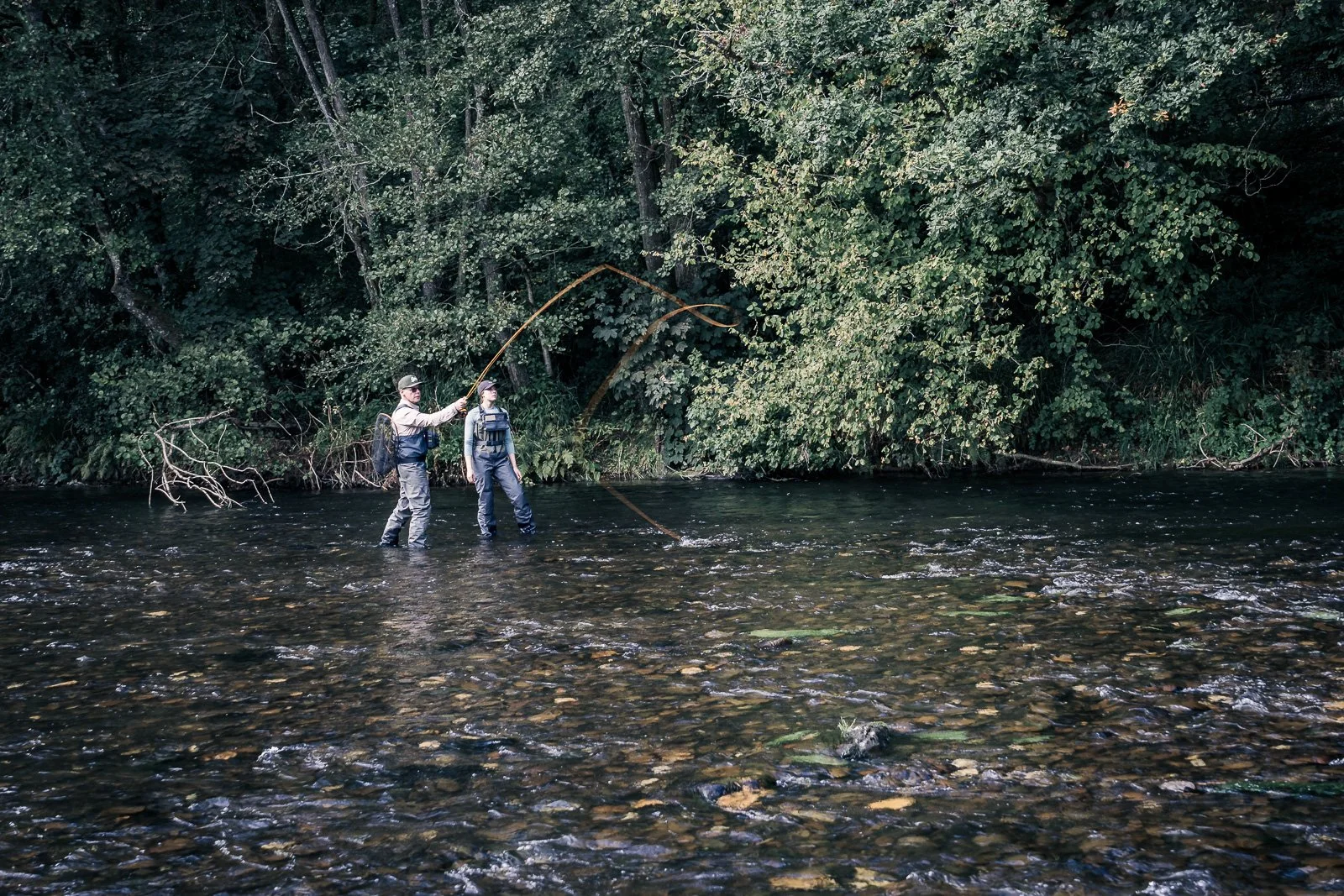
A roll cast is a forward fly-casting technique executed without an aerial backcast, using water surface tension and a D-loop behind the caster to propel the line forward. It is ideal when physical obstacles like trees or brush obstruct the rear, or when lifting line slack.
Intermediate fly casts
There is always a fresh challenge in presenting an artificial fly, and it is this continual problem-solving that inspires Andrew’s passion for fly casting. Conditions change from cast to cast: wind can disrupt distance and can cause safety issues, a longer cast may be required to reach feeding fish, river obstacles must be negotiated, and varying currents demand different approaches.
This session will cover a range of casts and adjustments designed to manage wind safely and reliably, minimising false casting and line tangles. We will also work on presentation casts that enable the fly to drift naturally — a critical element in increasing your chances of provoking a take.
Through deliberate drills, on-water demonstrations and personalised feedback, the session will equip you to assess conditions quickly and select the appropriate cast or combination of casts to improve accuracy, presentation and overall fishing success.
-
Learn the casting adjustments required in order to efficiently cast further while maintaining loop control. Andrew will also cover hauling to increase line speed and increase distance.
-
Learn how to cast off both shoulders and how to adapt the cast and learn techniques to safely cast during a windy day.
-
Learn presentation casts that will give you more options to present a fly naturally and to get around obstacles.